This is an edited version of the 96 End Street piece I did on http://www.johannesburg1912.com in 2025. I’ve added it here to form part of the ‘history of nightclubs’ series that I’ve quietly been building over the last few years. It started out as an IDOLS piece but extended to cover Mandys, the early history of the building, and touches on ESP. I’ve left in more on the actual clubs and less on the building history.
IDOLS (like Mandys before it) was one of Johannesburg’s iconic nightclubs tucked away in End Street at the seedy edge of town. It was a building out of place in its surroundings, amplified by the fashionable crowd of models, actors, and personalities who filled its dancefloor, all blessed by the intrepid Larry Nathan (RIP) and his eagle eye; while the unlucky others were turned away for looking like hobos or on account of their lack of socks.
This gabled building has so many more stories to tell with its 118 years of history and links to famous architects, Randlords, stage personalities, gay history, and a parade of hundreds of thousands of clubbers spanning disco, high energy, house, and techno.
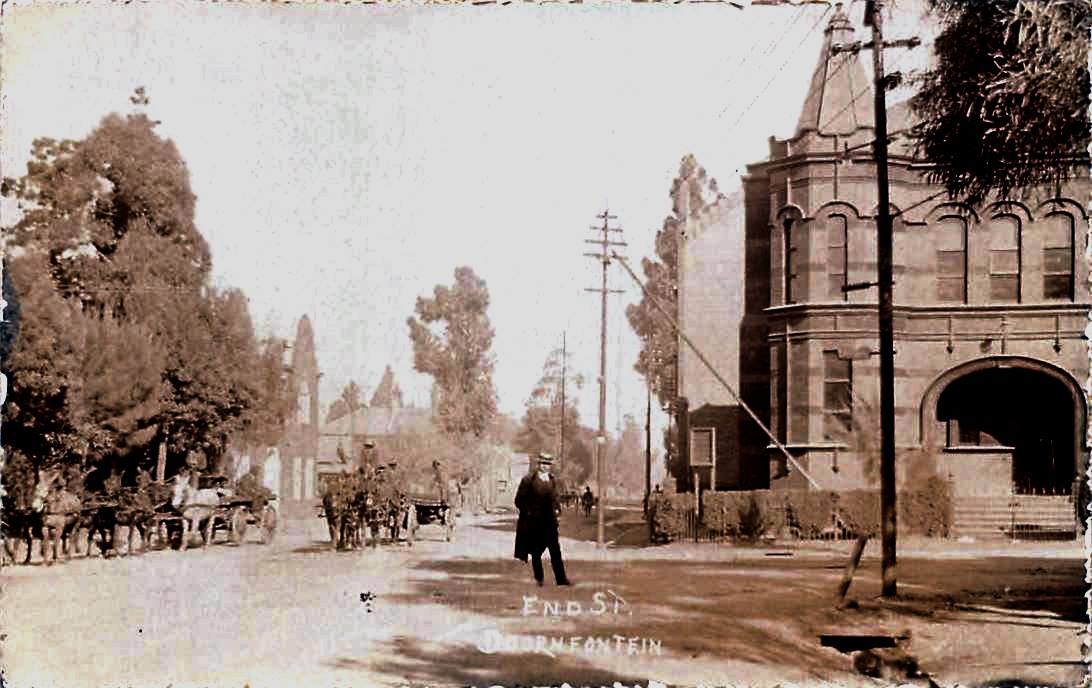
It started as a design in 1904 by Sir Herbert Baker and his partners Masey and Sloper. Long before that, in 1887, End Street once marked the literal end of the original town, where beyond lay the farm Doornfontein, soon to be one of Johannesburg’s first suburbs for wealthy Randlords. After the 2nd Boer War in 1902, many of the Randlords sold up and moved to the more secluded Parktown over the ridge, some leaving behind large properties, of which some were subdivided and sold off.
The ‘S. A. College of Music’ was founded by Samuel Epstein (who was responsible for opera at His Majesty’s Theatre) for director Herr Joseph Tressi, who was 50 years old at the time. Tressi had managed theatres in both London and the US and was also an accomplished musician and organist. The college started out as a finishing school for the daughters of the wealthy, and first operated out of 56 End Street (facing Jeppe Street) in temporary premises from early 1904 to the end of 1905 according to newspaper adverts.
The new school was to be built on what was once the tennis court of businessman Mr. Morris Rosenburg, known then as 62 End Street (later to become No.96). David Levinson, a later owner of the property, once saw an old photo of these tennis courts, and recalled they had waist-high walls around them. The school was completed later in 1906 under the patronage of José Dale Lace, whose husband John Dale Lace owned Lace Diamond Mine and was a director of several gold mines.
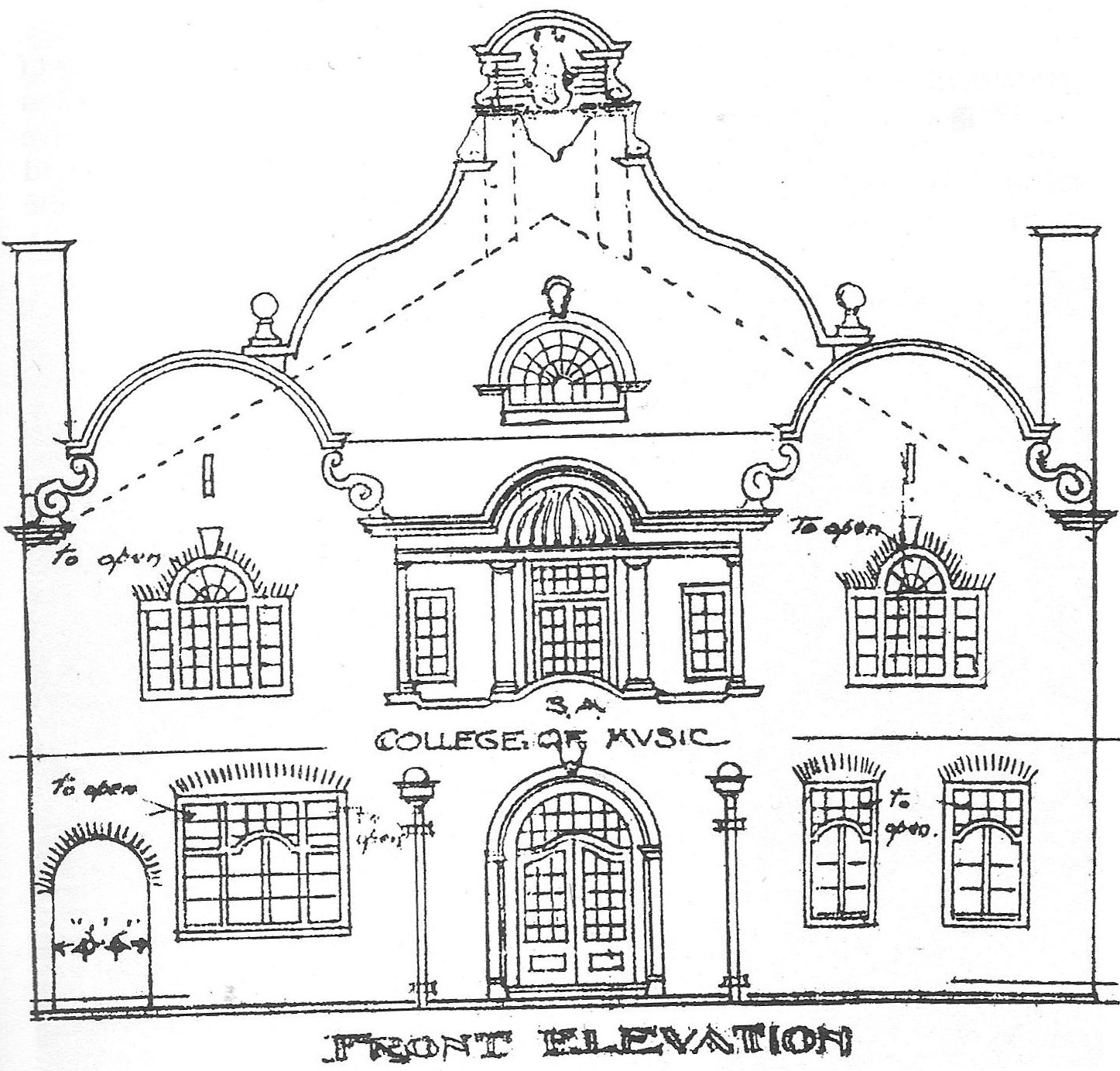
Even in 1906, the gabled buildings stood out, being an uncommon architectural detail in Johannesburg.
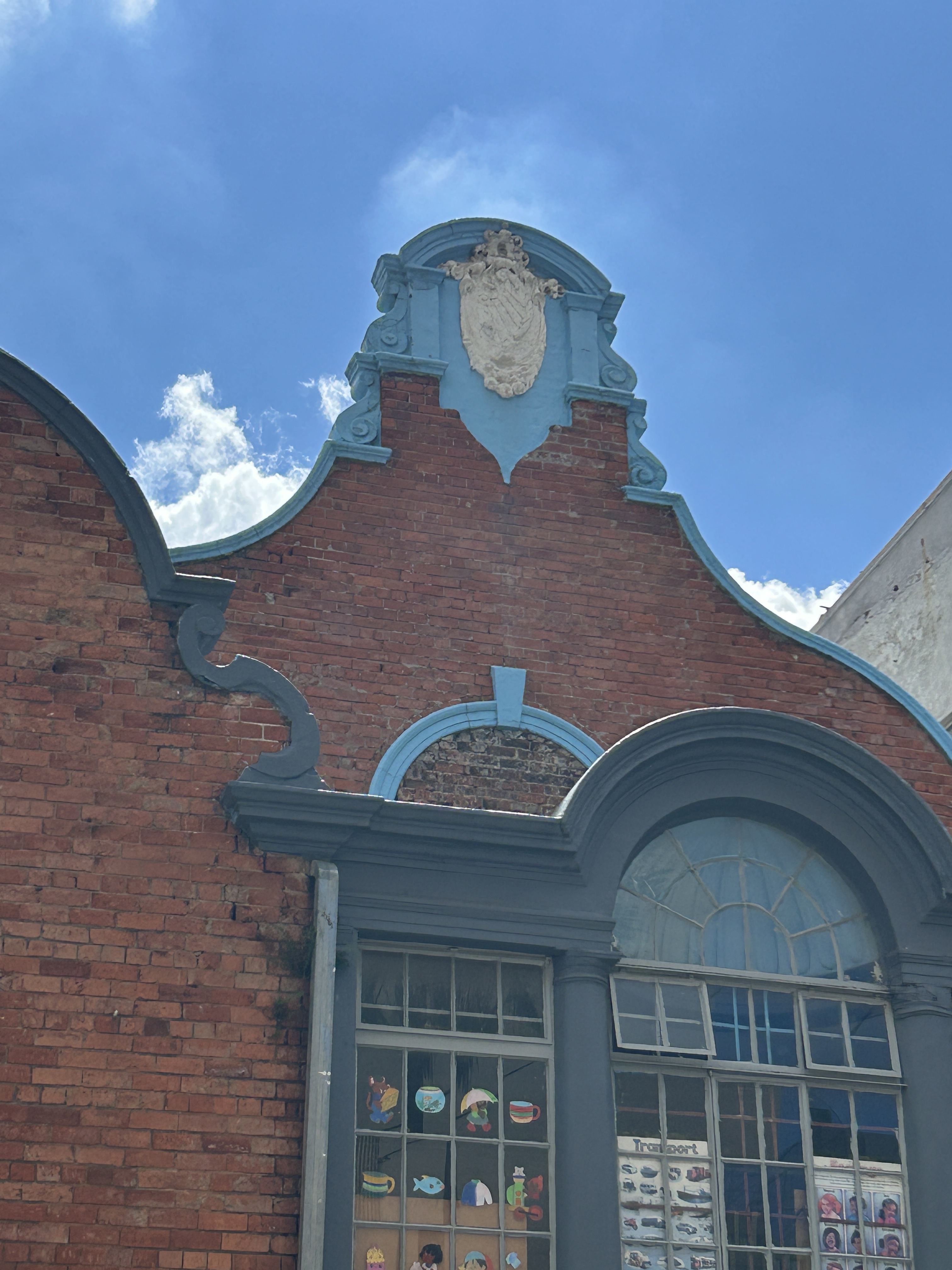
It remained the SA College of Music until early 1913.
Between May and October 1913, the building was used as a branch of the Tobias Matthay Pianoforte School.
It’s recorded that by 1918, the building was lying empty and derelict. In 1919 it was used by the SOS Boot Company for five years until 1926 when it was taken over and converted into a macaroni factory by the Sunshine Macaroni Factory.
In 1954 the building was occupied by Lob & Tonkin Ltd which was a printing company that may have also used some of the additional buildings on the stands behind.
A newspaper article from January 1960 describes the building as already abandoned. Its address in 1960 was still 62 End Street, but had changed to 96 End Street by 1967.
In 1966, satirist Adam Leslie together with theatre manager Bill Hudson acquired the building after Adam’s lease at the Intimate Theatre expired. At the time of the restoration done by Rhodes-Harrison, Hoffe and Partners, the only original parts left off the original buildings were the facade and the rooms behind it. The brick gables were likely plastered during the theatre conversion, which also added 230 seats with a restaurant and bar that recreated the music-hall ambience of London Players’ Theatre and the social life of Johannesburg in the 1890s.
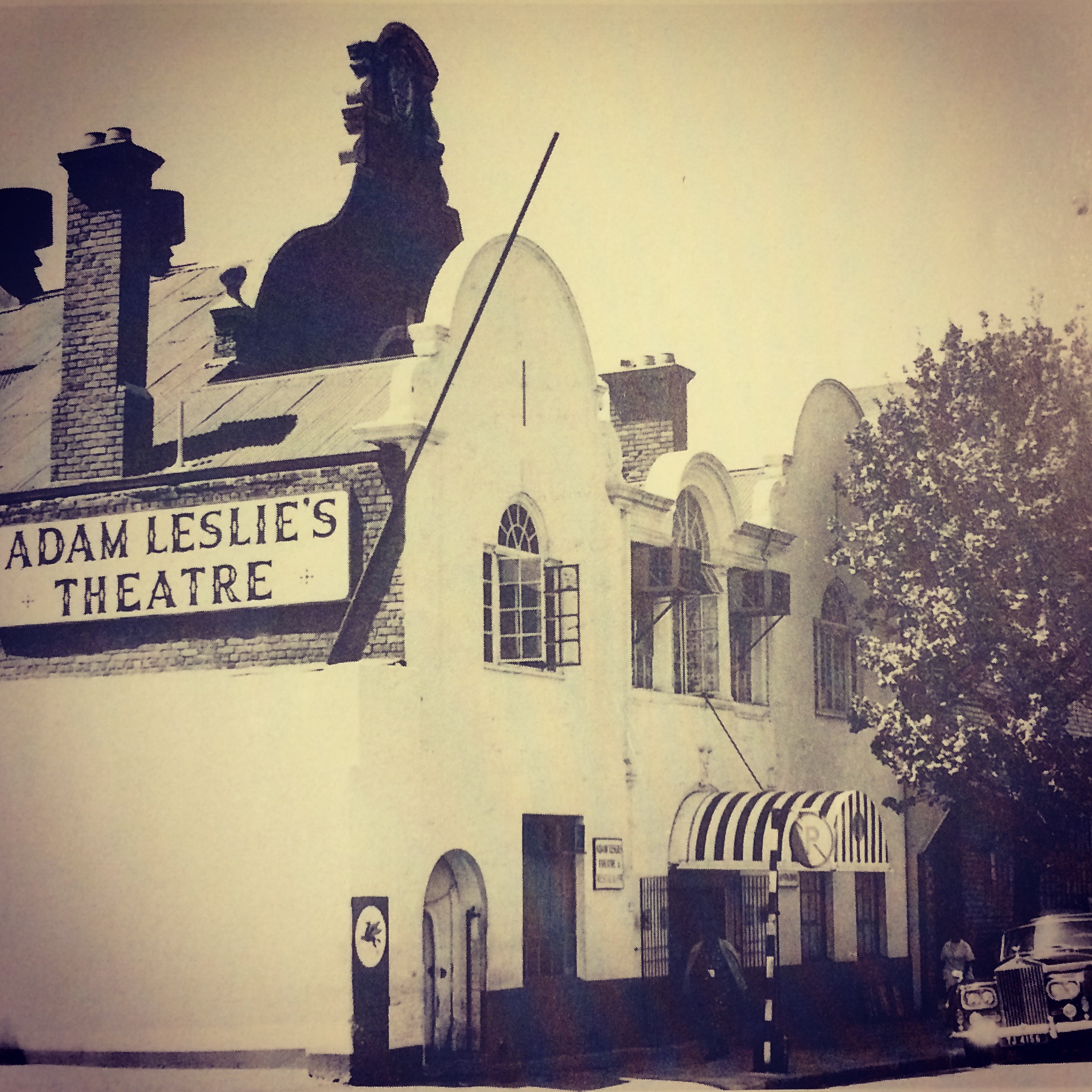
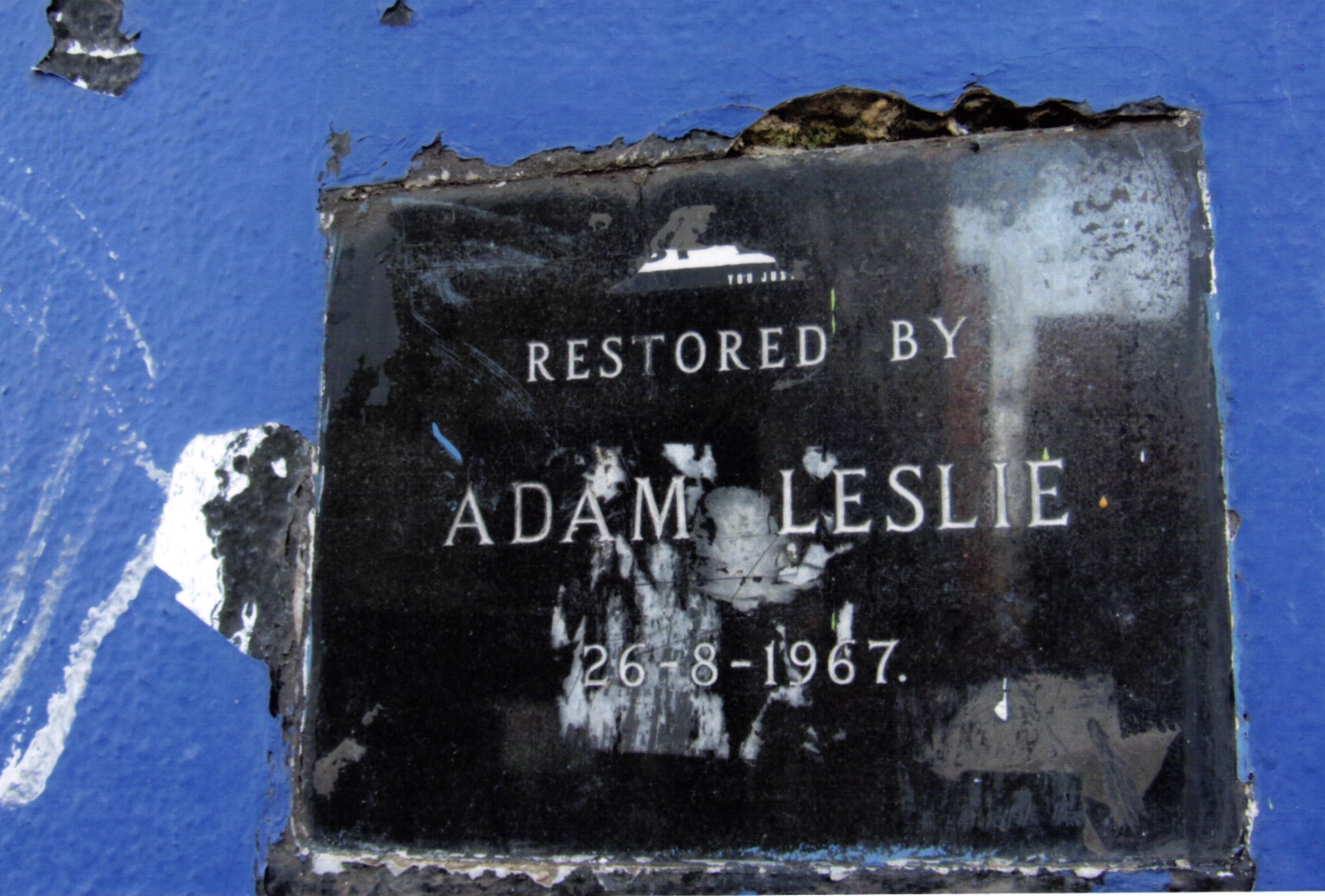
The Adam Leslie Theatre opened on 27 August 1967 with the show Music Hall Revue, starring Adam Leslie and Joan Blake, directed and designed by Anthony Farmer. Between 1956 and 1977, his company, Adam Leslie Theatrical Productions, contributed to, devised and/or directed more than 30 revues, cabarets and music-hall productions, many put on in the Adam Leslie Theatre.
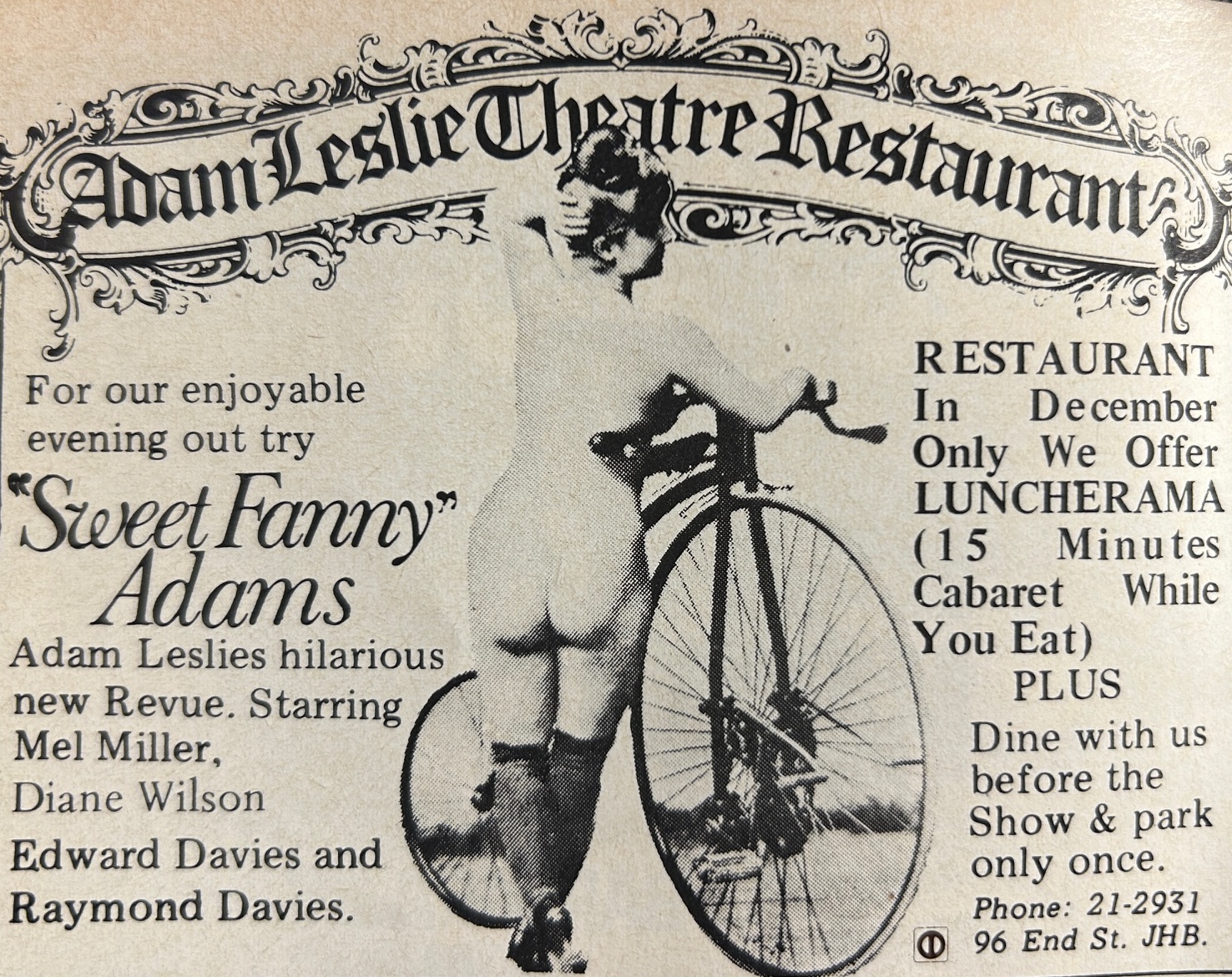
Adam Leslie closed the theatre on 31 December 1975 due ill health. He died four years later in April 1979 after his health and sight deteriorated even further after a stroke. The Stage obituary states he died after a battle with cancer.
In March 1976, the building went up for auction. It’s unclear what (if anything) happened at the auction, but a few months later it was rented by Stan Herson (later of Scants and Heaven nightclub fame) along with partners UK singer David Garrick, and Hector Fordyce. Garrick was an opera singer but had some chart success with pop singles in the 1960s, notably ‘Dear Mrs Applebee’ which topped the German charts and reached No.22 in the UK in 1967. After his singing career cooled he left London to live in Egypt and later moved to Johannesburg.
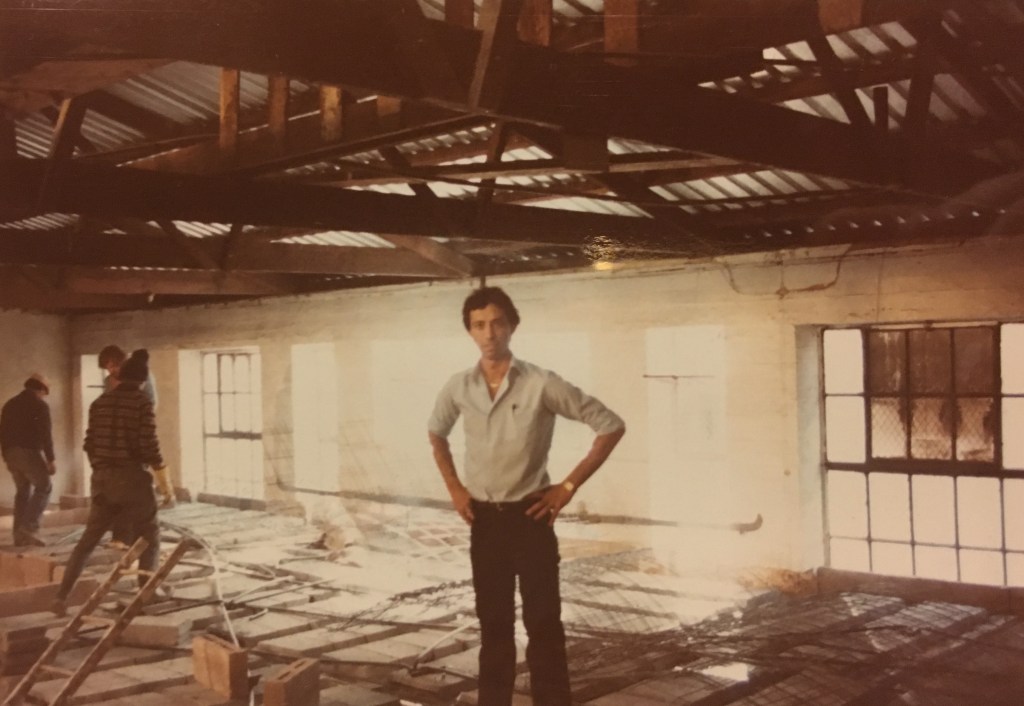
Hector ‘Hecky’ Fordyce was the grandson of Dorothy Susskind, who has an auditorium at WITS in the John Moffat building named after her for her fundraising efforts.
Stan and his partners planned to open a gay nightclub. Both the Dungeon and Anaconda were running at this time.
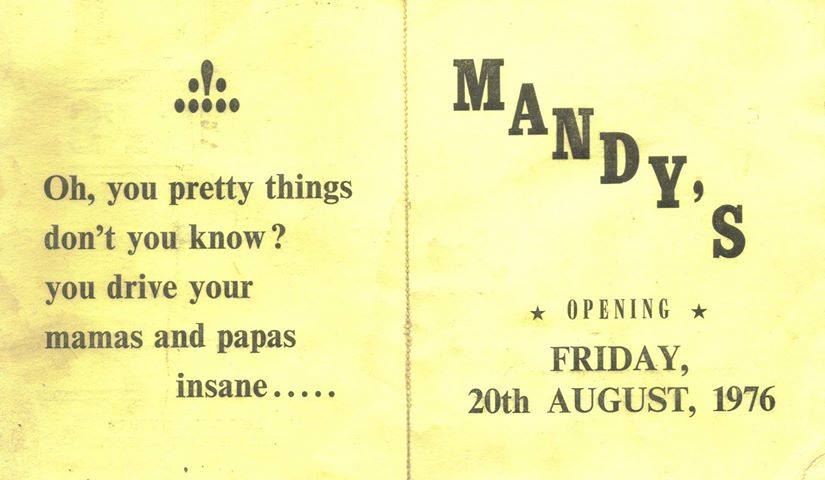
Mandy’s opened on Friday 20 August 1976. According to Stan Herson, it only lasted for two, but not longer than three months.
One of the original barmen, Louis de Araujo, recalls gay clubs being pretty basic in those days, what one would call ‘rough and ready’.
He remembers the Mandy’s building being rundown, with most of the interior (including the windows) covered with a coat of black paint to hide all sins. The dancefloor was ringed by steel scaffolding with an elbow and drinks rail. Lighting was very basic theatre lighting that consisted of spotlights with coloured gels supplemented by ultraviolet fluorescent tubes and the ubiquitous mirror ball. The DJ booth was a small raised chipboard shed at one end of the dancefloor. The ‘most elegant Edwardian bar in Joburg’ was no longer. Presumably, Adam Leslie removed the antique fittings after selling the building. Outside was a mural of something similar to the Rolling Stones ‘lips’ logo along with the legend “Oh you pretty things…”
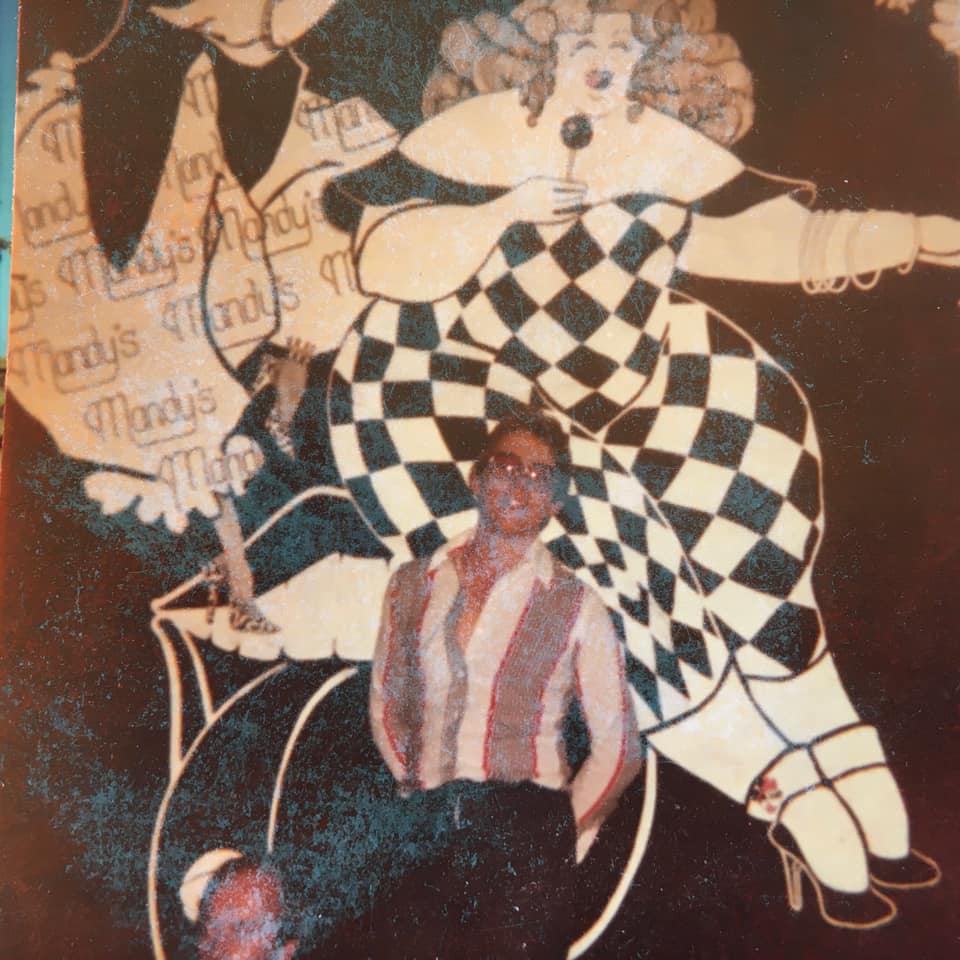
Louis, an interior decorator, designer, and painter, was responsible for the mural of the ‘dainty fat lady’ in a harlequin leotard sitting on a toadstool. It was painted above the built-in bench on the halfway landing, passing between the dance floor downstairs and the rooftop patio, which was open back then.
Mandy’s was an unlicensed gay club. This meant that it was targeted by the vice cops for both being a gay club and illegally selling alcohol. Louis and the staff spent a couple of days in John Vorster Square after a raid over a long weekend. Police could be bought in those days with home appliances. They would often warn of an upcoming raid which could then be averted by said purchases. Some nightclubs got around this by becoming members-only establishments and allowed members to bring their own bottles of alcohol which were stored in a locker (The Dungeon was famous for this). Later, some clubs charged a high door fee and did not charge for alcohol at all – only mixers. This is likely where the ‘watered down trough beer’ and glasses ‘washed in meths’ stories come from. The quality of the alcohol was always the cheapest in these cases. Another ploy was to make everyone a member, so when police raided, it could be claimed to be a ‘members only’ party and not open to the public.
Louis remembers defected Russian ballerina Natalia Makarova, who was in Johannesburg under contract with PACT to dance Swan Lake at the Civic Theatre. “One night after a show she came to Mandy’s with a bunch of ‘PACTerinas’. She requested ‘Sweet Transvestite’ (from Louis who occasionally filled in DJ duties) and everyone scattered as she took to the floor. Her high kicks in strappy heels brought the house down. She wore a Halston-style burgundy chiffon pants suit and her ubiquitous turban-style headscarf.”
Legend has it that the first Mandy’s club was burnt down by ‘people’ connected to the rival nightclub ‘Anaconda’ after the Mandy’s owners refused to pay protection money. Anaconda was housed in the basement of a building at 76 De Villiers Street, across the road from the Drill Hall. The fire happened while Stan was in South West Africa on an army call-up. David Garrick was subsequently arrested on suspicion of starting the fire for insurance fraud, but it was discovered that the club was not insured. Stan confirmed there was no insurance payout. No one I’ve spoken to remembers how the fire started or its aftermath.
Another version is that the police burnt it down. Besides being a gay club, black men had been found inside during various raids. Dirck Pont remembers that during raids, the black men there for the party would pretend to be staff working at the club when questioned by police. The Apartheid regime’s disdain of gays and Africans, and then having them mixing together illegally (and possibly sexually) in a white area, and on the Sabbath, cannot be overstated.
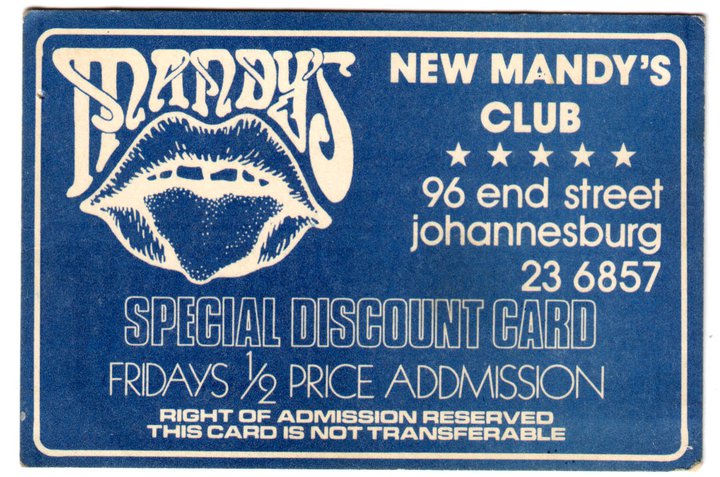
The fire-damaged building was then ‘purchased’ by Anaconda owners Zeke Kerbal and Tony Ritch, which was either suspicious or fortuitous, depending on which version of ‘who started the fire’ was true. There are also theories that the money came from underworld figure Jack ‘Babyface’ Goodwin. Either way, it was replaced almost a year later by the not-quite-inventively-named ‘New Mandy’s’ in July 1978. It was still ostensibly a gay club, but selected straight people were also admitted.
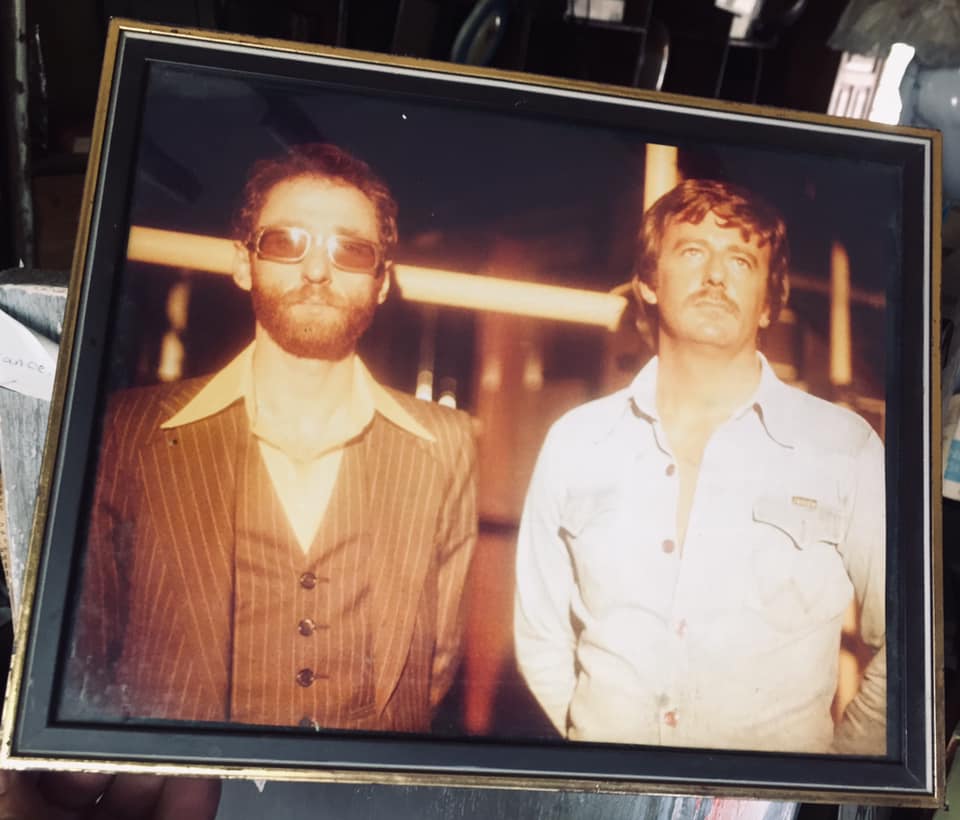
Andrew adds, “In the early 80s Mandy’s was very popular and though primarily a gay club, it wasn’t gay men only and there was always well known people of the day to be seen (like Dr Christiaan Barnard’s two sons, the daughter of Louis Luyt and many SABC TV and radio stars)”
I asked Louis about ‘straight nights’ at gay clubs – “I don’t think straight nights were a thing at gay clubs in the very early days, but random straights could always show up in the crowd. New Mandy’s had two straights on staff: Ailsa Driver, professional fag hag, ran the box office. A beautiful vivacious blonde who dabbled in modelling. She earned royalties for years from a Guronsan C commercial she did. Or Salusa 45, can’t remember. Her Husband Rod was definitely straight and he managed the door. They both worked at Anaconda too.”
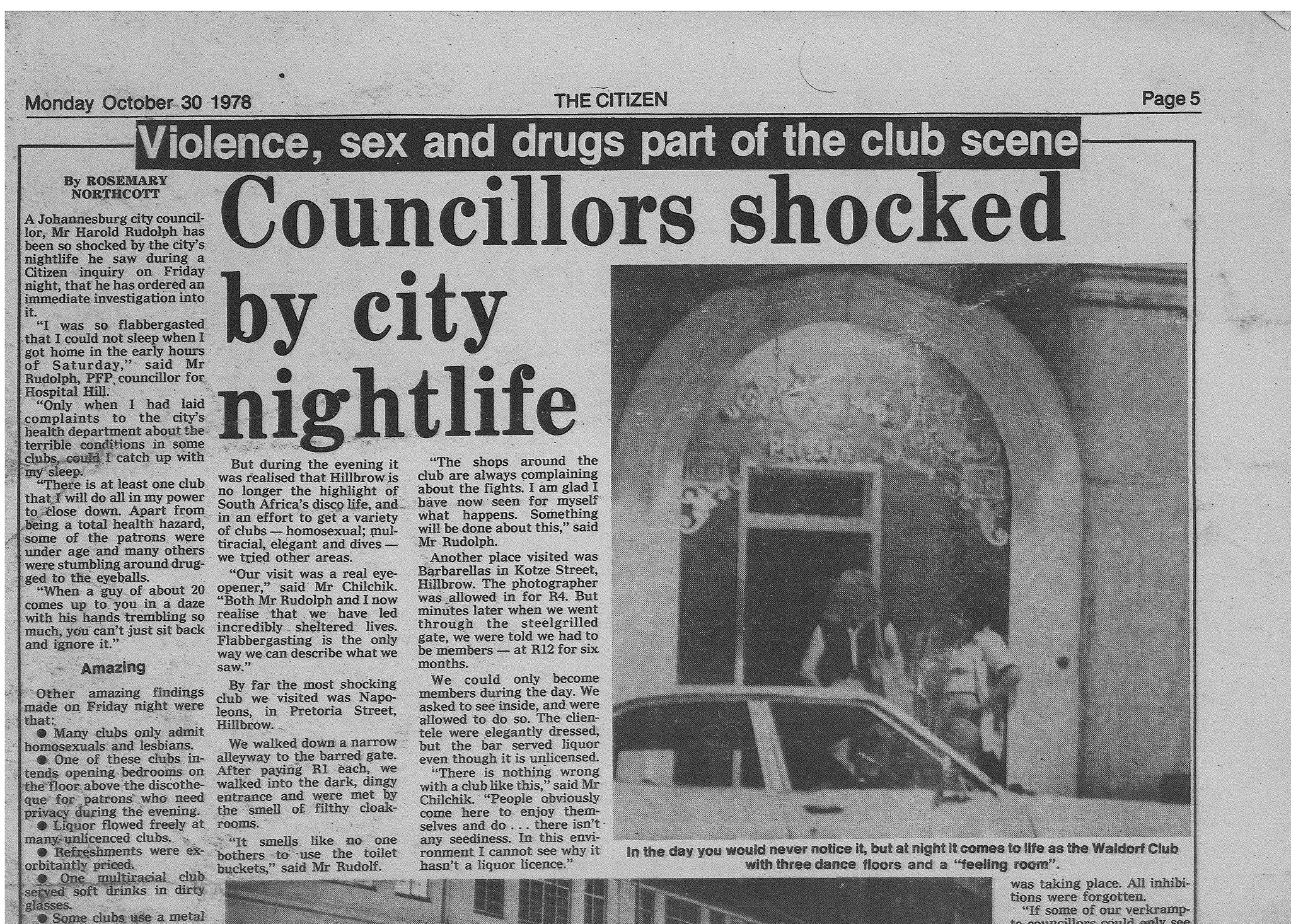
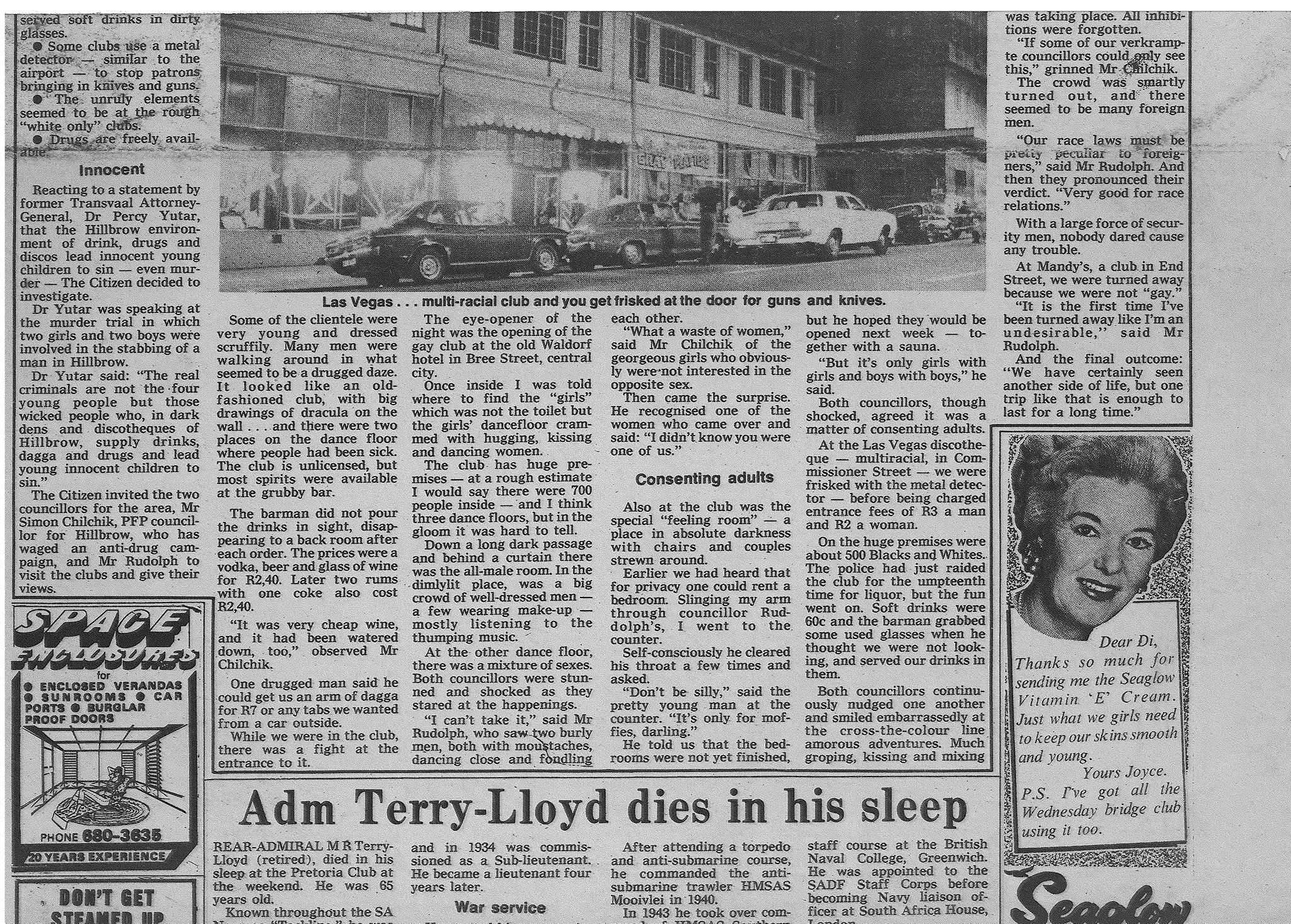
In October 1978, an article appeared in the Citizen about two councillors who visited several nightclubs in Hillbrow and town to investigate complaints of drugs, noise, violence, underage drinking, race mixing, and unlicensed establishments. The only club they couldn’t get into was Mandy’s because they didn’t look gay enough.
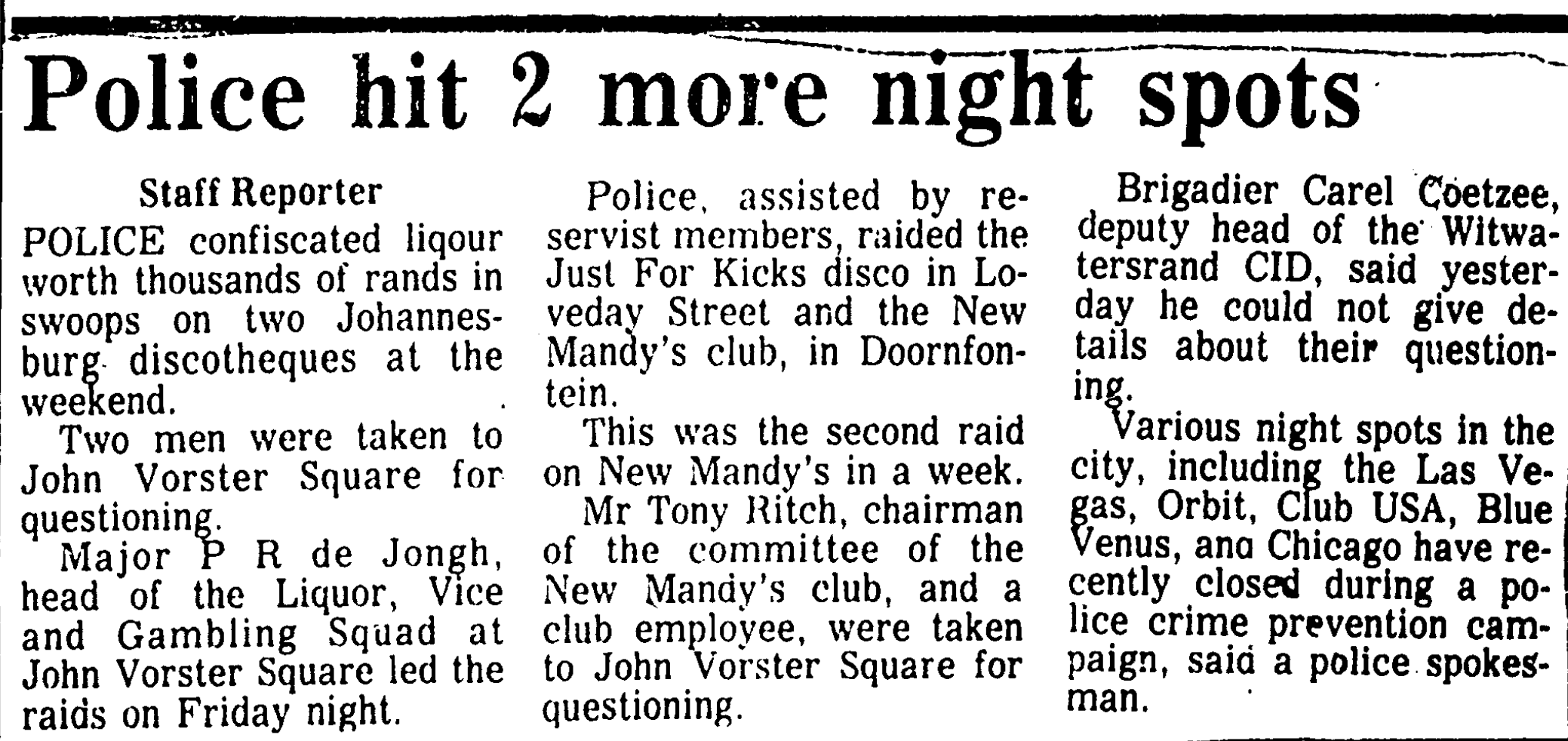
A few months later, a report of a raid appeared in the Rand Daily Mail of 8 January 1979 where ‘chairman of the committee of the New Mandy’s nightclub’ Mr Tony Ritch claimed the raid was the second one in a week. All the alcohol was seized and Tony and the staff were questioned at John Vorster Square.
There is also mention of a December 1978/9 police assault on the New Mandy’s Club, in which patrons fought back, referred to as South Africa’s ‘Stonewall’. The timing coincides with the 8th of January article but with no details.
Mark Gevisser writes, “Although the grounds for the raids were always drug-swoops, liquor-busts or searches for minors, it was clear that their real reason was to curb this defiant new sexuality. At a raid at The New Mandy’s over the Christmas holidays in 1978/9, for example, patrons were manhandled, photographed, verbally abused, and kept locked up in the building until morning. There were a few black gay men present at the club, and they came in for the harshest treatment. Many South African gay people refer to the 1979 Mandy’s Raid – and not the 1966 Forest Town Raid – as South Africa’s ‘Stonewall’. This is because clientele, and particularly the drag queens, fought back (there are stories, perhaps apocryphal, of police officers with head-wounds incurred by high heels), and also because it was this raid – and a subsequent one the following year at the same club – that, more than anything else, prompted some gay people to move beyond the ‘social support’ model and begin talking of rights once more.”
Although often repeated (and somewhat enhanced) in various texts, the details of this raid are varied. Louis commented that drag queens didn’t hang out at Mandy’s, but rather at the Dungeon. Unfortunately, gay periodicals and movements only started being properly organised in 1981, so this incident’s significance went largely unreported. The Forest Town raid of 1966 was not a ‘Stonewall’ moment but resulted in even harsher laws via the strengthening of the Immorality Act. One was the ‘men at a party’ clause which criminalised “any male person who commits with another male person at a party any act which is calculated to stimulate sexual passion or to give sexual gratification”. A party was defined as more than two people present. Before and after the new laws, outing in the press as being gay was worse than any possible prison sentence.
Jan Vermaak added, “the raid did take place..but no violence…all patrons and staff were detained for several hours and then questioned, names and places of domicile recorded, but no one was arrested. They were released one by one in the early morning…please remember that clubs did not have liquor licences in those days. Usually, management had paid informers and were aware when raids were to take place…small amounts of booze was confiscated, and after the police left fresh booze was stocked at the bars, the music came back on, the lights were dimmed and all was as usual….I cannot recall if the club was closed for the rest of that night…but it was open as usual the next weekend. It was definitely not a Stonewall type of situation, and the relationship between police and management was always cordial…..money talked.”
Dirck Pont, once owner of Casablanca in Rocky Street, was a regular at Mandy’s from the early days and was caught in several raids. He said nothing like a ‘Stonewall’ went down to his knowledge.
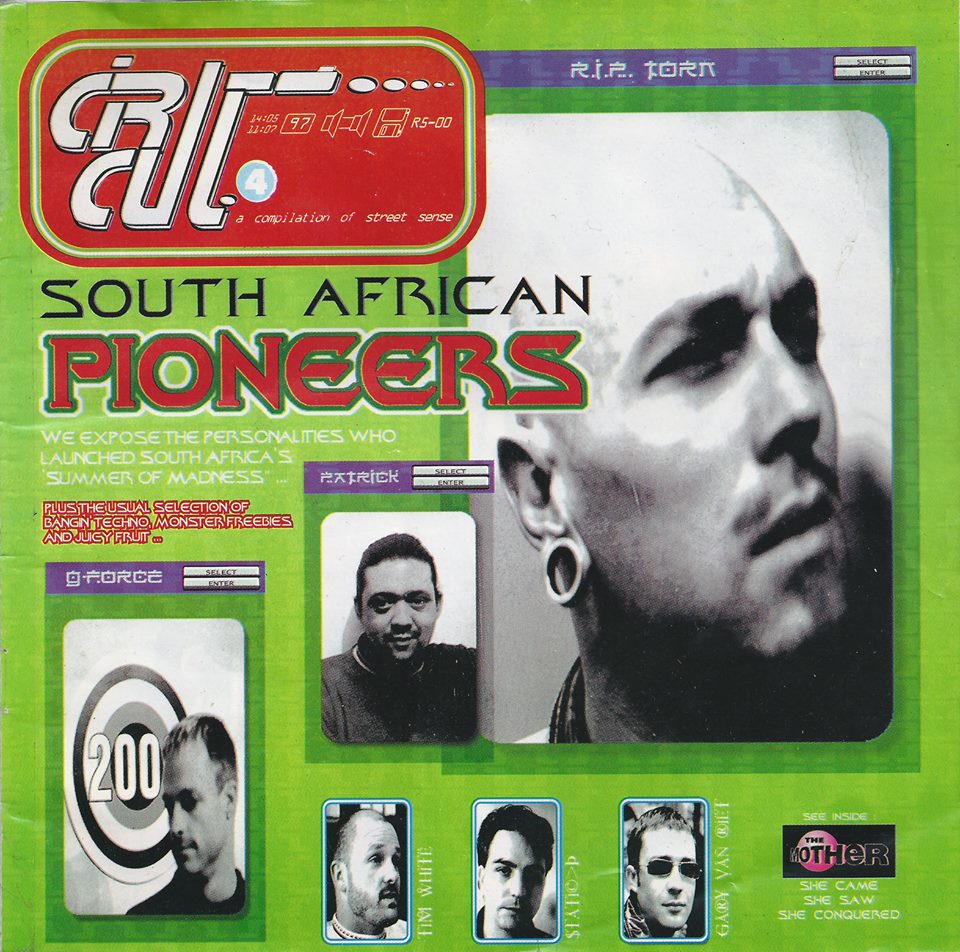
Gary Van Reit (later of ZIPPS fame) first visited Mandy’s in November 1980. He was friends with Jan Vermaak (Anaconda, New Mandys), Andrew Wood (later of Scants, Heaven), and Patrick Talmadge who he’d met at Jan’s record shop ‘Eargasm’ in Hillbrow. He remembers Jan Vermaak and Peter Richie as the DJs at the New Mandys from 1978 to the early 1980s. When Gary started going there, Patrick Talmadge was the resident DJ.
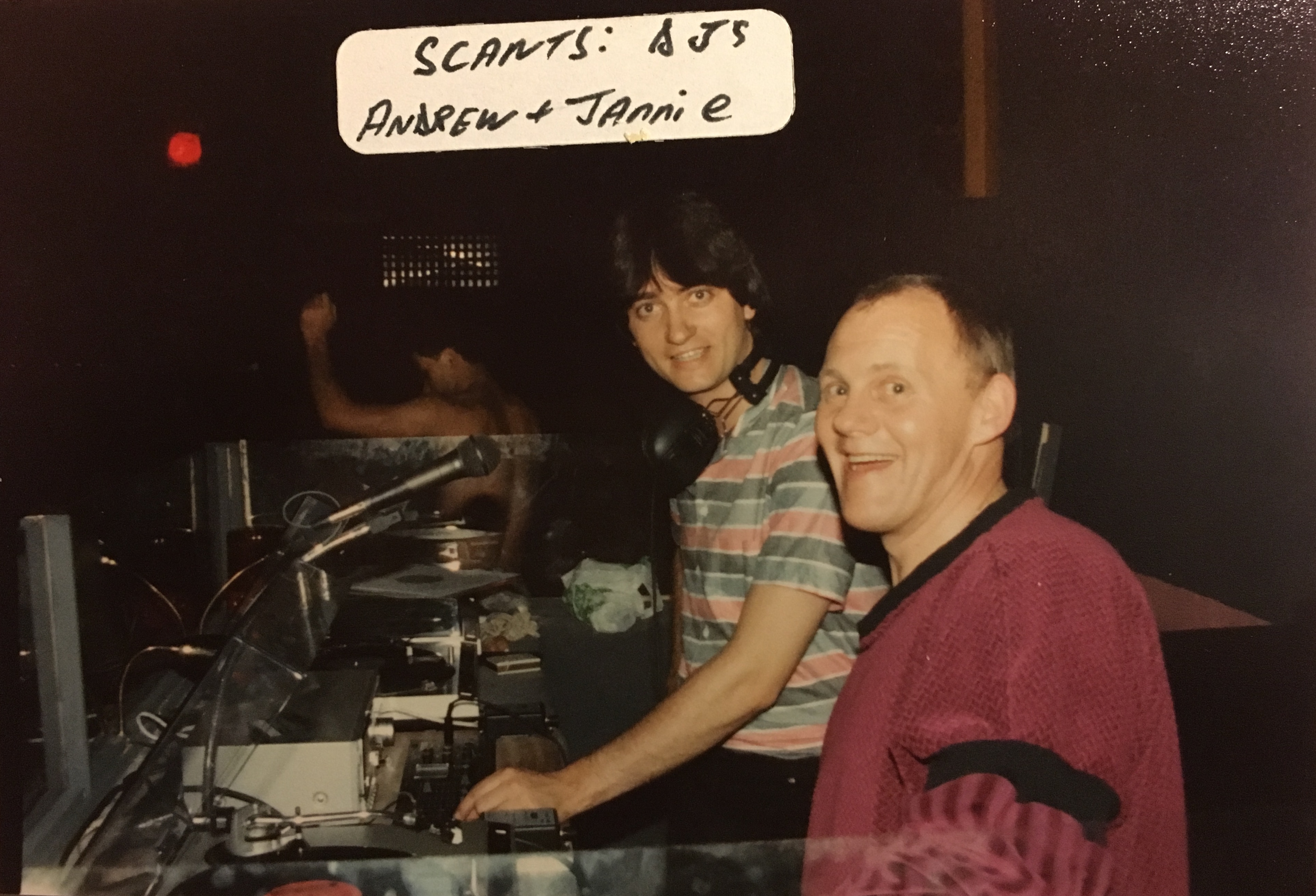
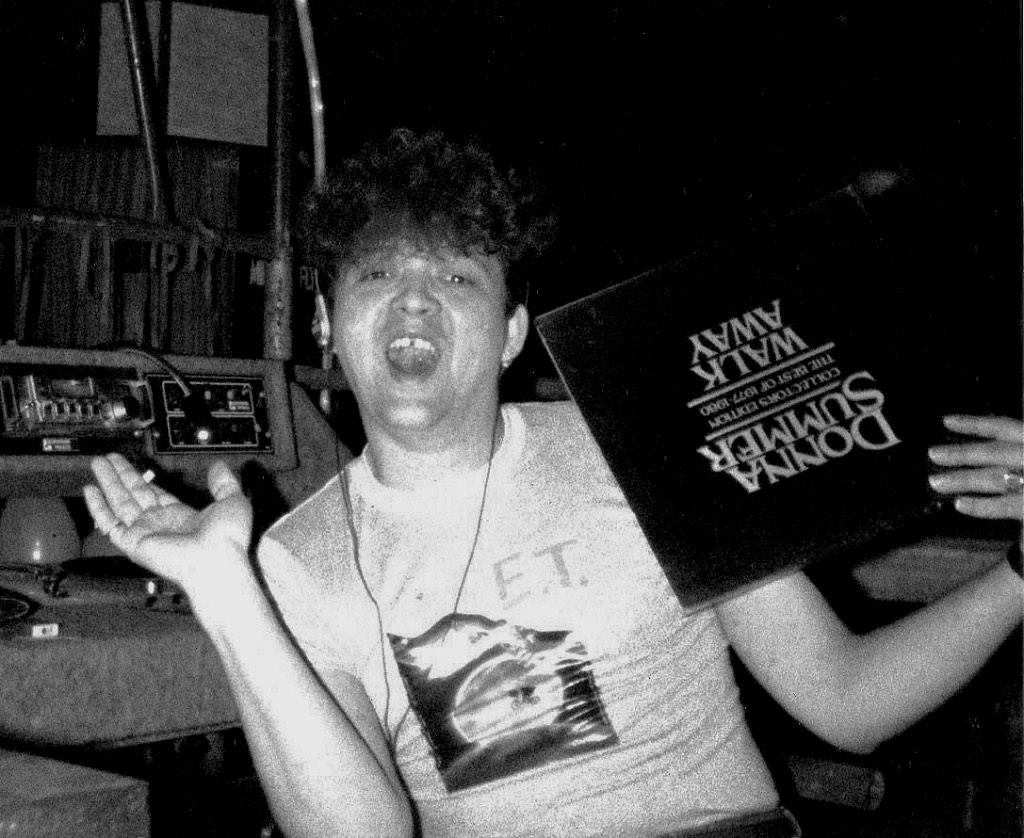
Then, the interior of the club, particularly the dancefloor area, was still mostly painted black. The bars downstairs and upstairs were painted black, red, and gold with mirrors. Gary remembers the sound was exceptionally good. The DJ box was at the end of the dancefloor behind glass, and a familiar image was of Patrick (or Doris) standing behind the decks flaunting his cigarette.
Andrew provided a detailed description of Mandy’s c1980: “The dancefloor downstairs was octagonal with the DJ box at the far end. The huge black speaker boxes were on either side of the DJ box as were railings/viewing spots looking over the dancefloor. There were two pillars covered with broken mirrors on either side of the inside of the dancefloor and a small dance box/platform in the middle for a single person to dance on/show off. There was no step-down, you entered a swing door and the dancefloor was only separated by two narrow passages on either side. Opposite the dancefloor was a raised seating area on the left. The passageway to the right had seating booths to the side, one of which, nearest the DJ box was almost a long narrow room (known as the “black hole”, primarily used for sexual activity because it was unlit and you could not see who was in there).
There were steps going up either side of the DJ box, to the large bar that was at the back behind the DJ box. This was the main bar. The entrance to the club was controlled by the front door – there was a ticket booth before the gate, where you paid and got a stamp on your wrist in case you needed to go out and come back in. When I was going there, the booth was operated by a camp queen (forget the name), who stamped your wrist and said “your passport to pleasure”. You then walked in and straight in front was a coat and hat counter where you could also buy cigarettes. To the right was the “downstairs bar” also known as the ladies bar. It had red and gold wallpaper, candelabra style lighting and seating areas. You entered this bar by the kind of swing doors you see in western movie saloons. This was Nicolette’s bar for many years. (Nicolette Wessels, who even got to manage it on Sundays for a time, when they used to screen movies on the far end of the wall upstairs). The stairs to the upstairs bar and adjoining dancefloor were to the left as you walked into the club. Halfway up the had a cushioned seating area where you could sit and watch who was coming and going. Upstairs had a small dancefloor with speakers fed with the music from downstairs and a long bar. This dancefloor was often claimed by Granny Lee, who used to proclaim was hers. To the left there was more seating areas either side of sliding doors to the entire outside section, which had more seats and arched corridors to either side with more benches. The high wall at the back (painted white) was used to project multi-coloured lights from a small room above the upstairs bar (this room was not open to the public). On Sundays they used this to project movies on the wall too. I distinctly remember seeing “Play Misty For Me”, the Clint Eastwood thriller. The Sunday nights weren’t that popular and eventually came to an end. I remember speaking to the actor Peter Wyngarde one Sunday night – he was there the night before with Sam Jones and some of the cast of the movie “Flash Gordon” which they were promoting.
To the left side of the outside upstairs area was a fire escape going down to the street at the front. This I believe was used before as the main entrance to the club. It wasn’t used during the time I was going there. Tony Ritch had given me a VAP Card (Very Attractive Person) at the time, which allowed me to free entrance and drinks, providing I helped out at all the bars when it got busy – which I did. I also lived in the same building as Nicolette (Gainsborough Mansions), so I often went down to the club with her to open up and set up the bars with ice buckets and such. So I was always there for a number of years”
A note on the music: An important source of club music were the SAA air stewards, who would visit clubs in London and New York, and bring back all the latest records for the DJs and clubs. This ensured the clubs with these connections were up to date with music that could be heard nowhere else in Johannesburg. Club owners would purchase the records and stamp them with the club stamp to ensure they were not removed, although DJ’s also had their own selections to supplement the clubs collection.
Mandy’s and New Mandy’s existed during the disco era, with New Mandy’s also seeing the transition from disco to early electronic/new wave and European disco after the US anti-disco movement. The details of this transition is not for the scope of this article, but fascinating nonetheless. The sound went underground and became more electronic with the explosion of affordable synths and drum machines and morphed into High Energy, Italo Disco, and eventually early house music by the mid-1980s. 96 End Street lived through it all. Its foundations have been shaken by Moroder, Rodgers, Cowley, and Orlando as it all played out.
While interviewing Gary, we hit on the idea of creating some Mandy’s tapes to go with the Idols tape.
One of the challenges putting the vinyl mix together was the sheer choice of music. Over the years, various DJs collectively played thousands of records – some popular, and others not. Gary selected and mixed 90 minutes of music that covers some important floor-fillers from the era, but also lesser-known records, many of which were ‘Mandy’s records’. It’s a slice of what a typical night would have sounded like in the early 1980s. Some of these records have never been digitised, and some are even from the original club.
Listen to the first all vinyl Mandys mix on Mixcloud HERE (You’ll need to create an account, but you’ll find other club tapes on my profile which will make it worthwhile)
Mandy’s didn’t get going until midnight and typically went on until 6am. It could accommodate 500-600 people all paying R8 cover charge and drinks for free (except mixers). This was to get around the liquor licence requirement. According to the Government Gazette, the club was granted a liquor licence on 20 June 1980, so this may have affected the later cover charge.
A number of people have mentioned the drug culture at Mandys and other clubs at the time: Acid, poppers, Obex (diet pills to stay awake) and Vesparax (pills to go to sleep). Even the Mandy’s name was a shortening of the drug Mandrax, although I can’t confirm if this was intentional.
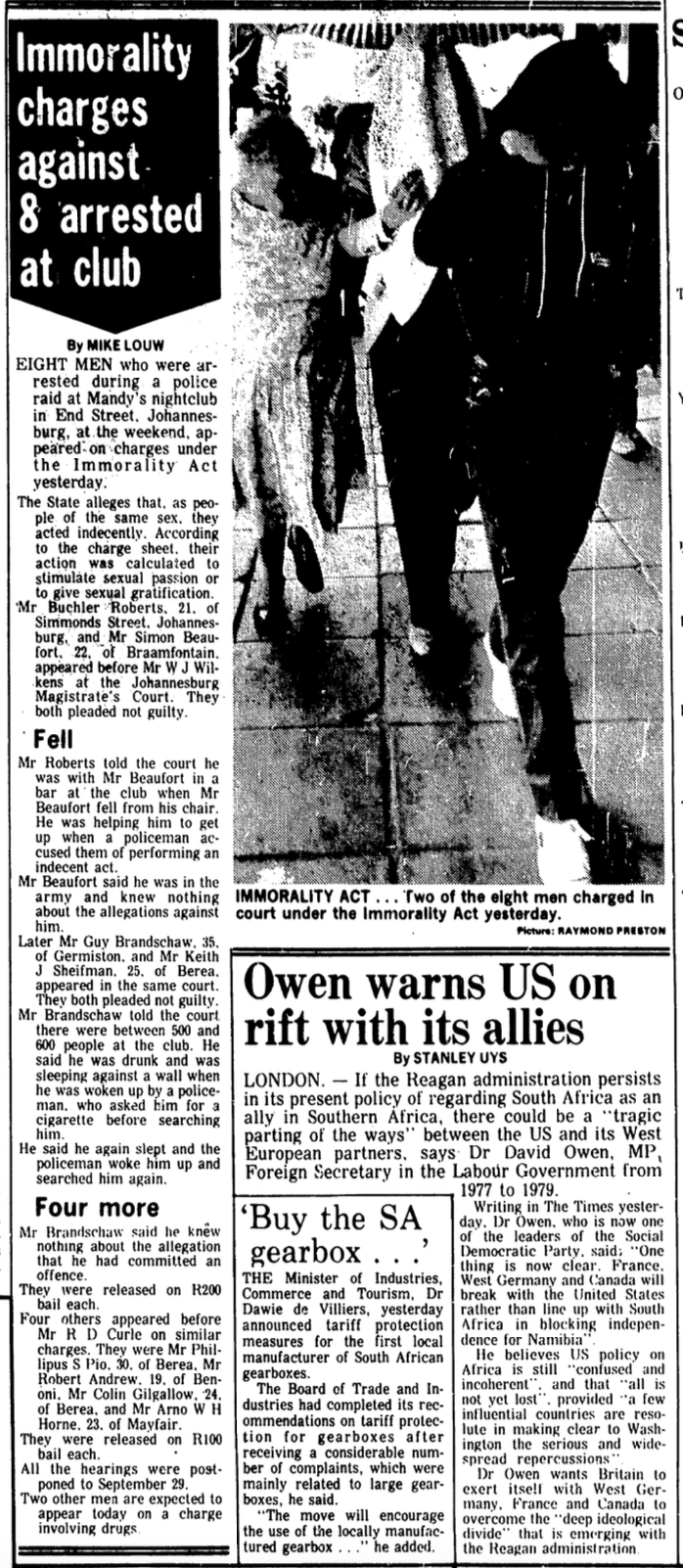
In September 1981, eight men were arrested and charged with immorality. The details were ludicrous, suggesting police saw an ‘indecent act’ when a man fell off his chair and was helped up by another man.
Andrew adds that “there were always raids back then and people were arrested for “dancing on the sabbath”, “holding hands, kissing or dancing with another man” and other such nonsense. I think this was that raid you referred to in 1981. Sometimes the club closed right then and there, and other times, there was simply a van load of alcohol waiting to replenish the bars once the police had taken all the booze and left…one raid shut the club down for a weekend and Tony organised a disco and braai in a barn on a farm outside Jo’burg. Patrick played from a DJ box set up with scaffolding. It was a great day and night and very well attended. Like a rave – before raves existed! Patrick let me play too, which was amazing. I still have a photo of him in that DJ box waving a Donna Summer cover. I remember Stan was there too as his famous red Ferrari was parked outside.”
In June 1982, Tony was in front of the magistrate for contravening the Sunday Observance Act in September 1981 (the same raid as the immorality arrests) by ‘allowing entertainment in the form of dancing and music at the club on a Sunday’ invoking the draconian laws from 1969.
Andrew adds, “I was once at a big Mandys raid, around 1980. The police confiscated all alcohol on the premises, and arrested several clubbers seen holding hands with, or kissing another male. I remember some were even arrested for dancing with another man (shock horror)! They also flipped through all the records in the DJ box to make sure none were on the “banned list” (I remember them paying particular attention to one called “Cruising the Streets” which made us laugh). They then closed the club using an old law that did not permit “dancing on the sabbath” because it was Saturday night, but after midnight – which made it Sunday! This was often deployed simply because they didn’t like “moffies” and had nothing to do with selling alcohol without a licence. Sometimes the clubs were tipped off about forthcoming raids, or suspected one was due, so kept the bars as minimally stocked as possible.” The granting of the liquor license in June 1980 clearly prompted the authorities to find other reasons to raid the club, although alcohol was confiscated whether there was a license in place or not, especially if the raid was in the early hours of a Sunday morning.
A new gay club called ZIPPS opened in Commissioner Street in November 1982 which eventually ended Mandy’s reign. Steve Harris and Peter Ritchie played at ZIPPS and Gary joined in April 1984. At the same time, Scants was opened by Stan of the very first Mandy’s, cementing Mandy’s decline. Andrew Wood became Scants’ resident DJ.
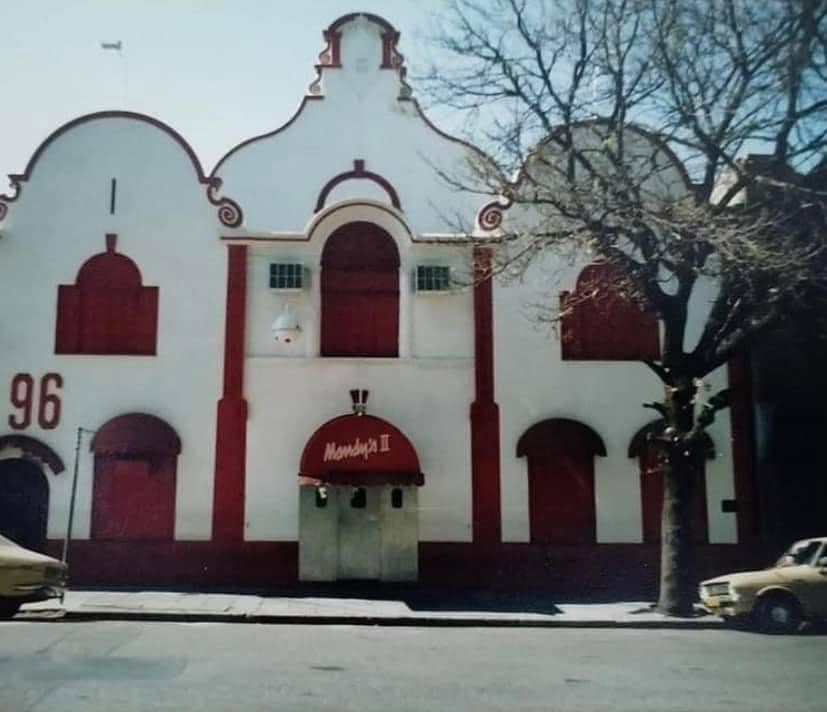
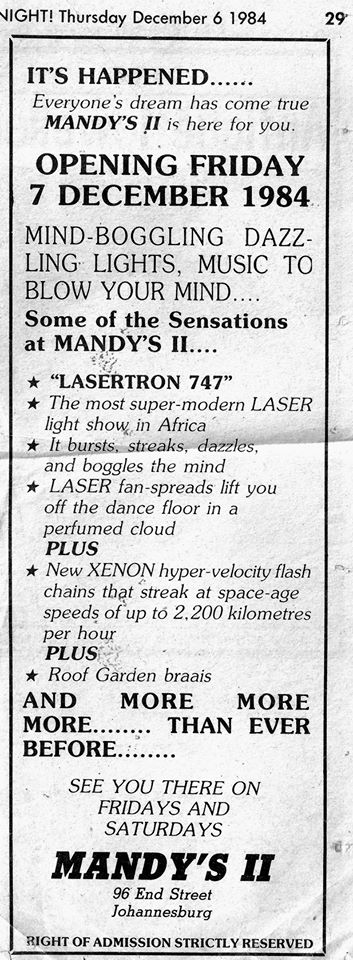
A newspaper listing from February 1984 indicates Mandy’s was now called Mirage. Mandy’s II was then launched on 7 December 1984 with a ‘Lasertron 747’, but appears to have been short-lived. This was the version of Mandy’s older friends of mine went to and got tapes from.
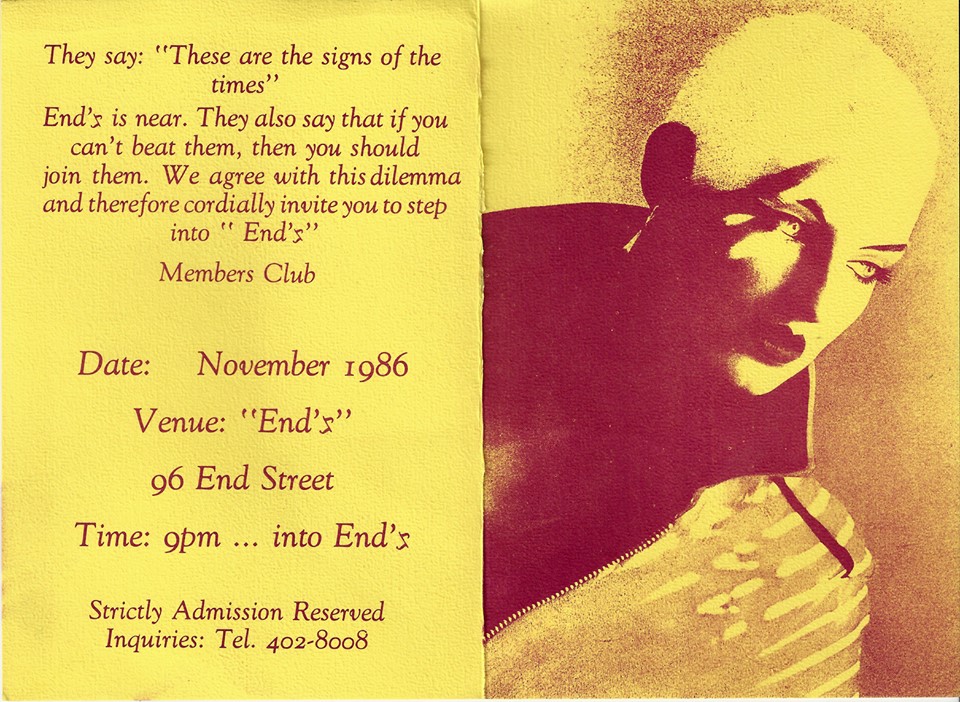
Around 1986, the then owner Alex Kouvaris renamed it The Mix Club, but quickly changed it to END’Z in November 1986 after issues with the police as the name and logo gave the impression it was a multiracial club. END’Z lasted all of a month.
IDOLS was opened on 10 December 1986 by new owner Wally Thompson. Larry Nathan ran the door. He previously worked as a doorman at both Zipps and Decodance according to Gary. David recalled that he also worked at Mrs. Hendersons (old Zipps). Justin Lange was the bouncer for some time. Around 1988, David Levinson got involved with the club. Wally had run into some money issues on account of horse racing and was bought out by David and another partner.
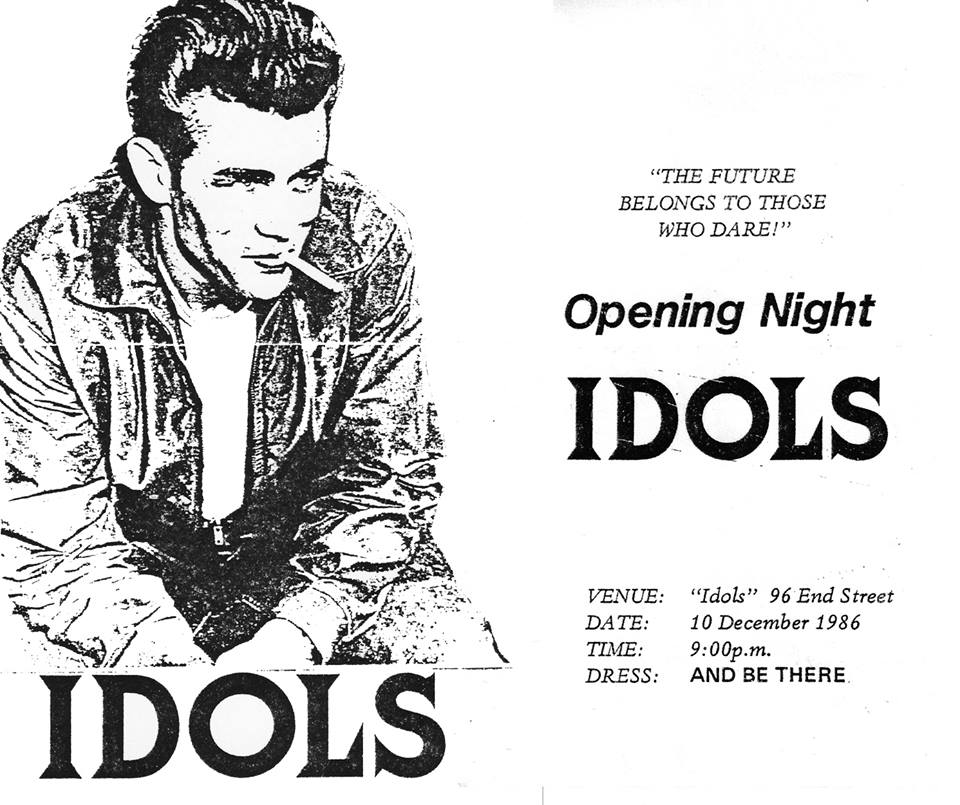
The club was aimed at the ‘straight’ market and over time became one of the most popular clubs in Johannesburg. It attracted a mixture of celebrities, TV and sports personalities, as well as well-heeled northern suburbs clubbers. Larry kept a tight rein on the door, and only let in the right crowd (depending on his mood)
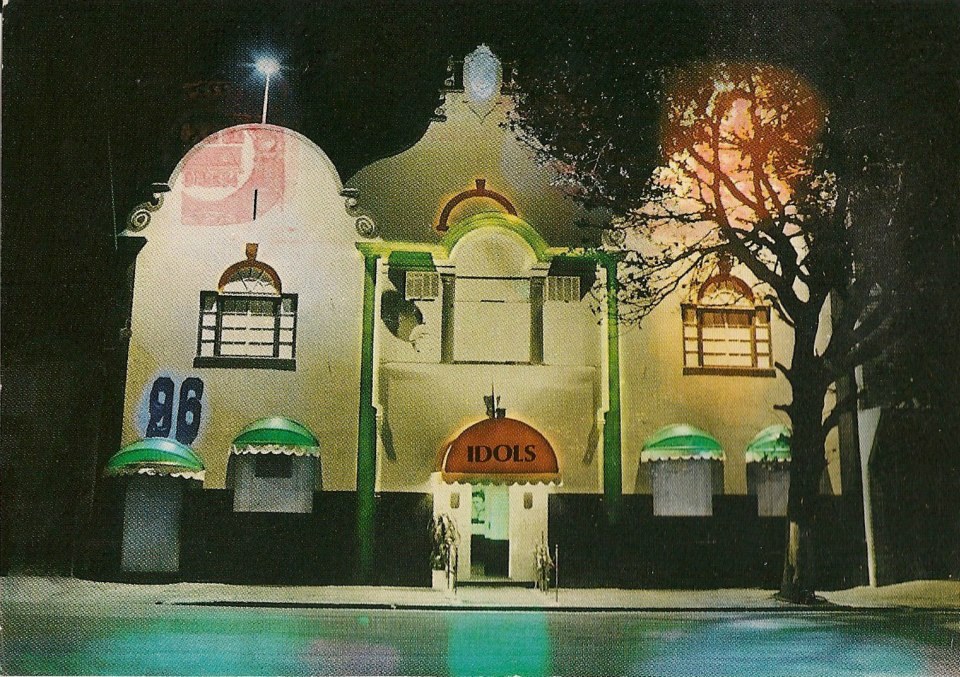
The mixtape is from May 1990, around the peak of IDOLS popularity. I’d been to the club in the later part of 1989 and recall quite different music to what is on the tape. It was still dance/house music but with tracks by The Clash, B52’s, DAF, and Propaganda thrown in. My overriding memory of IDOLS is dancing to ‘French Kiss’ by Lil Louis and watching the strobe lights chase each other around the oval dancefloor. Like Mandy’s, IDOLS existed for several years and covered various club music changes, so the tape, although an artifact of the time, doesn’t do the club justice. It was recorded live on the night and only represents 90 minutes of 8-10 hours of total music played. There are some level and pitch changes along with a few bad transitions, but these are normal. No one remembers these details, and it’s only because it has been captured that they can be heard over and over again.
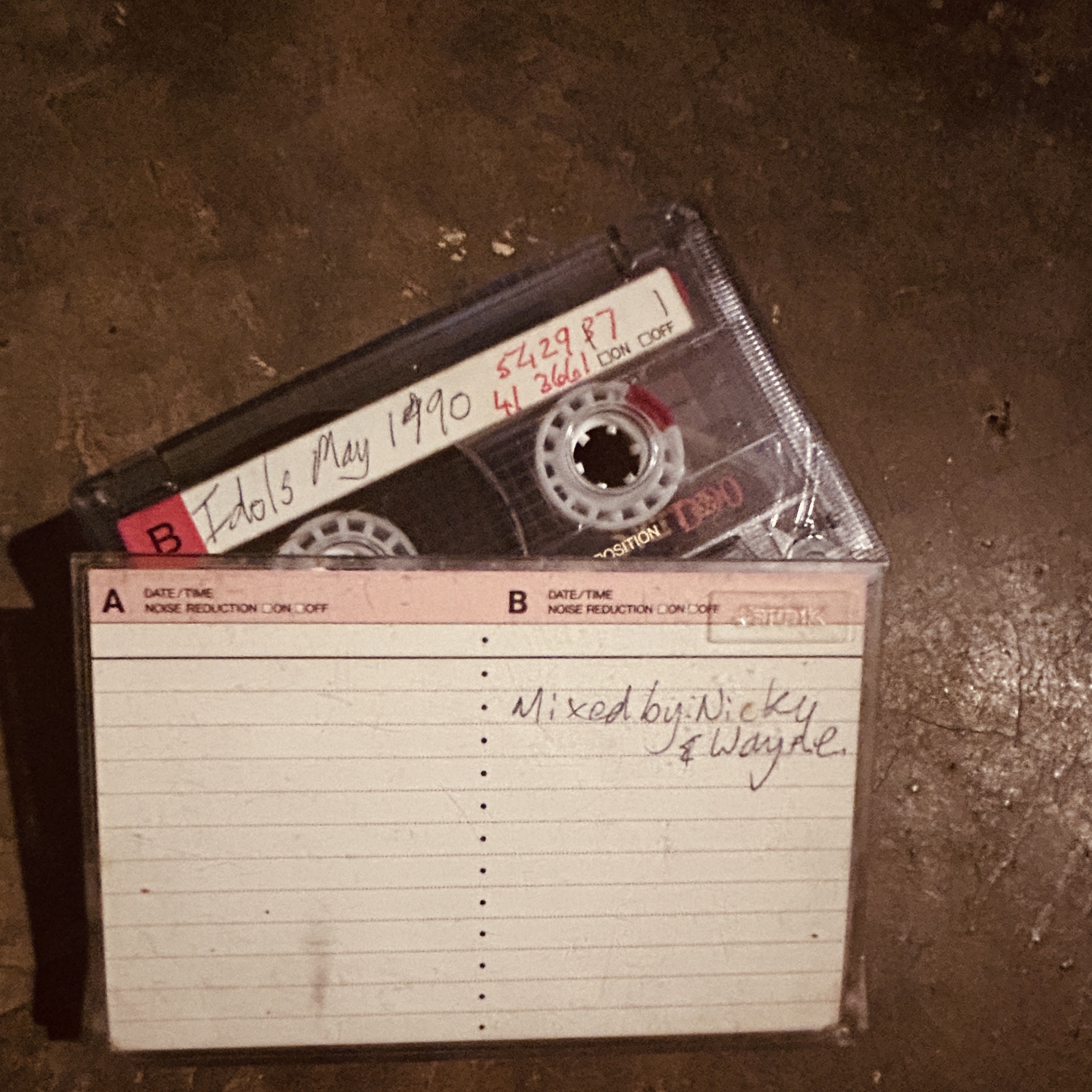
Listen to the IDOLS mixtape on Mixcloud below (You’ll need to create an account, but you’ll find other club tapes on my profile which will make it worthwhile)
Idols, in turn, was replaced by ESP in 1995.
ESP was initially started by three partners who rented the building from David Levinson. After a few months of cash flow issues, David Levinson again took over. He was running Chillers in Randburg at the time.
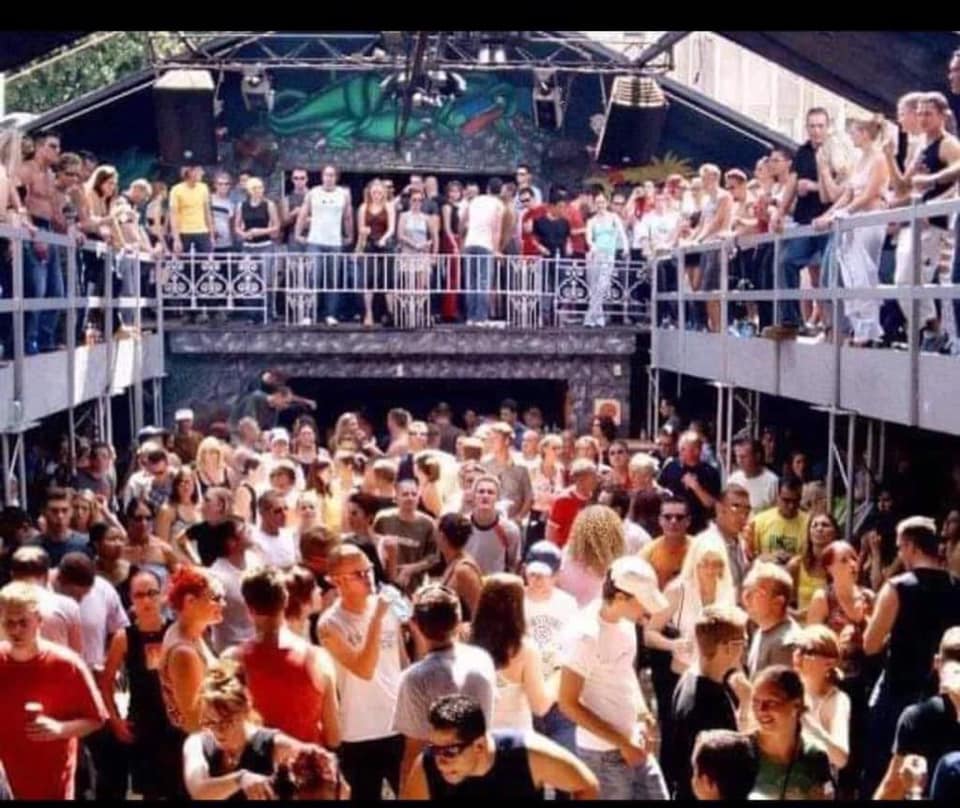
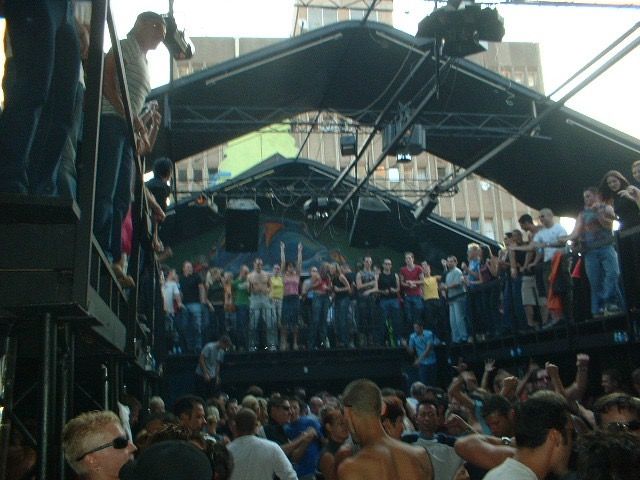
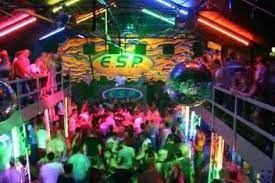
ESP had a strong run with DJs like Nelson, Surge, Dizzy, and Adrian, and went on to release several EPs and albums of club music. The club famously went on until Sunday afternoon, with crowds arriving for the early morning sunrise set, and staying all day until sunset. At the time, the city was in decline, so no one bothered ESP.
Some stills on Youtube:
Listen to a selection of the big ESP tunes on Spotify:
By the time ESP moved out of the neighbourhood in 2002, the area had taken a turn for the worse and the building fell into disrepair. It looked as though all was lost for this Johannesburg landmark. In 2017, a section of the building was transformed into a daycare centre and the original brickwork of the gables was exposed for the first time in 50 years. All that remains of the original building is the façade and rooms directly behind them, exactly like when Adam Leslie took it over. Plans are underway to eventually rebuild the rest of the building (finances permitting), but this will be treated as a practical addition, not a historical one. It seems that the facade is always the original survivor.
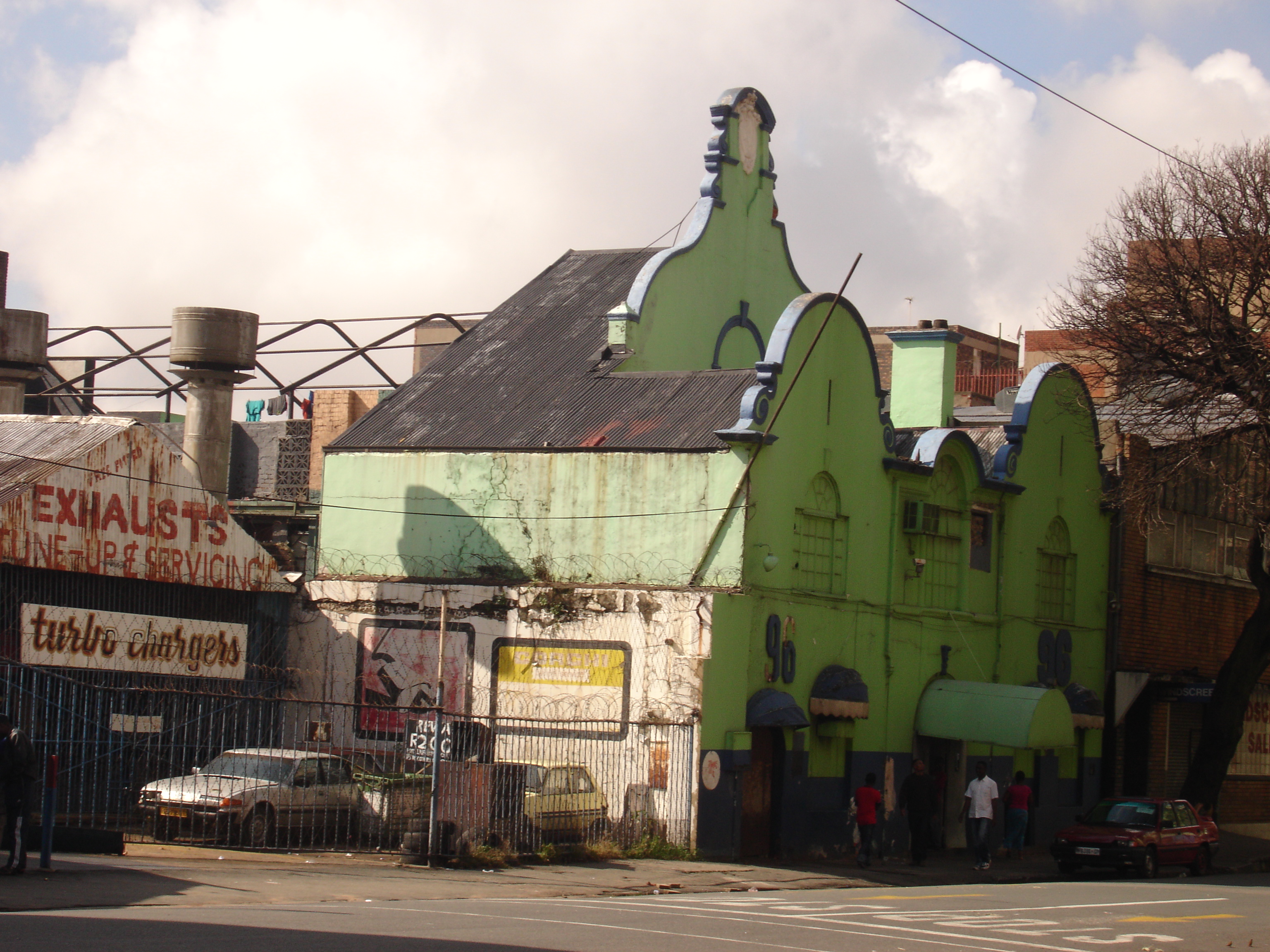
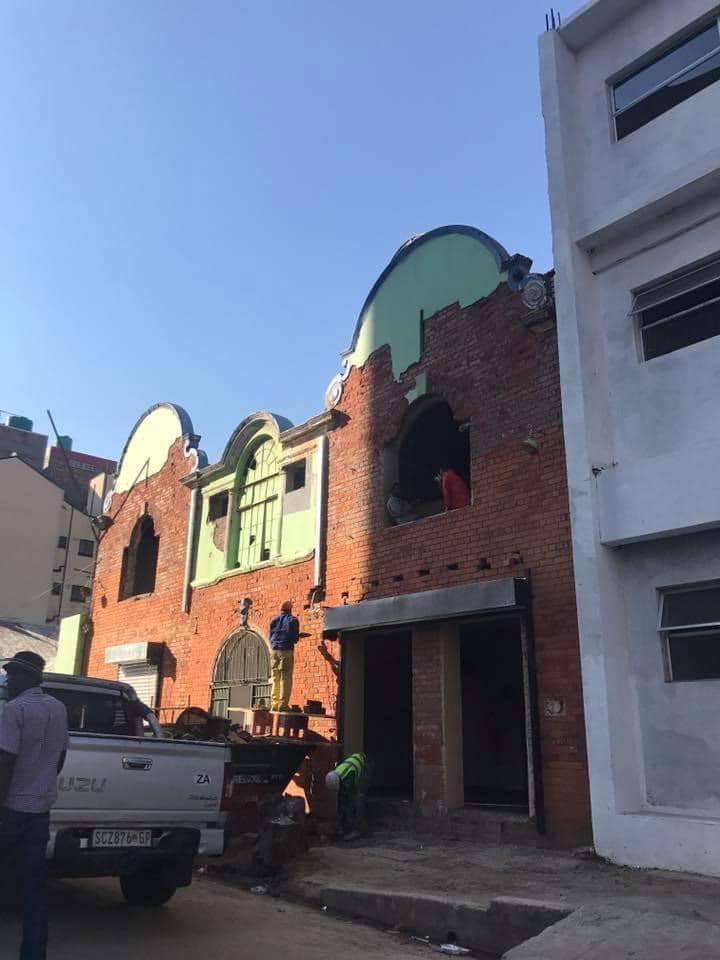
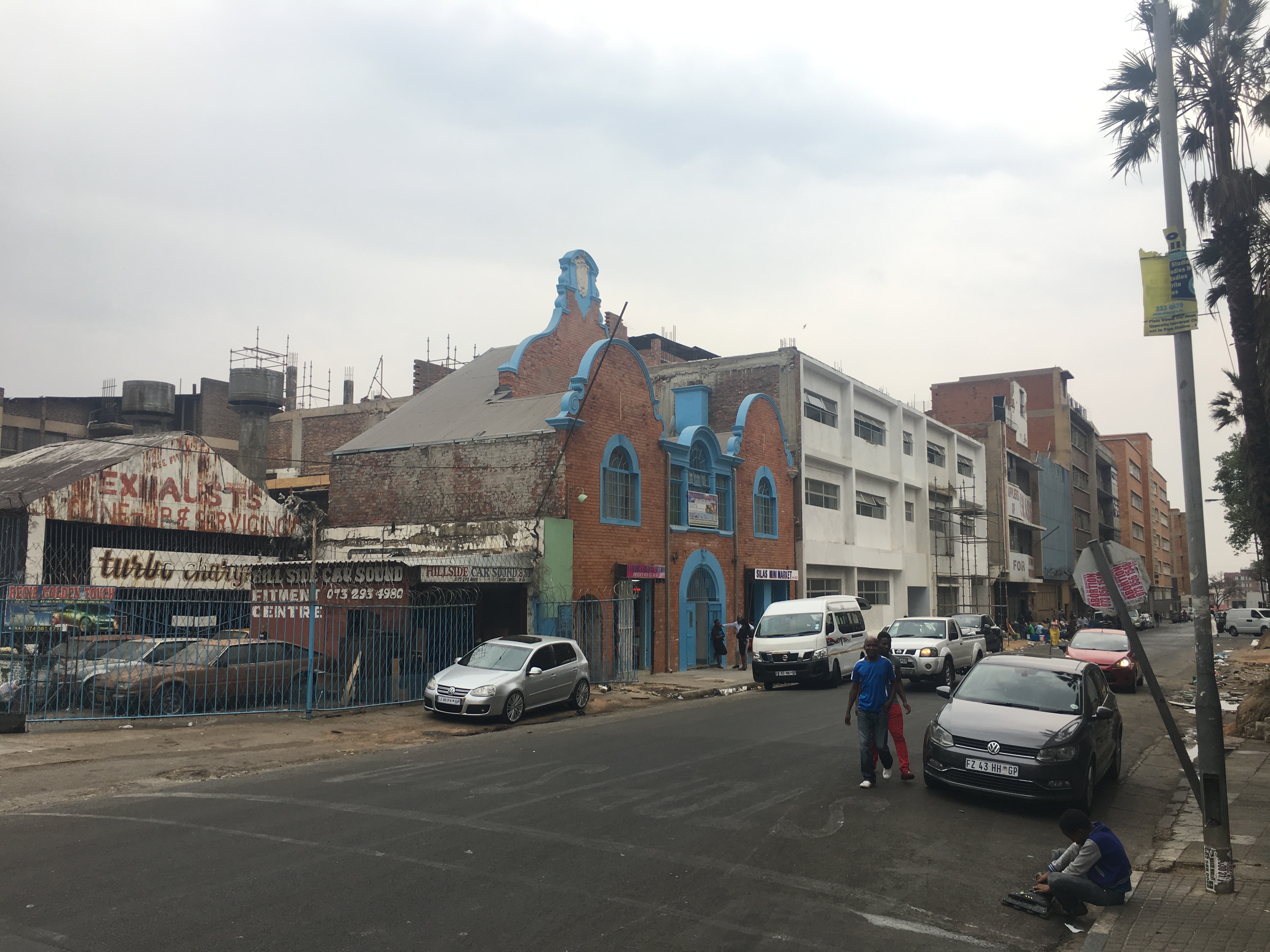
To all who went there during its club phase, it was a palace, an escape. The number of people who have been through those doors, lost themselves on that dancefloor, got drunk, taken pills, and made friends for life are innumerable.
Driving past in January 2025 to get a photo of the original foundation stone that is visible again, a guy from the business next door commented on how many people drive and stop outside to take photos. They all tell him about their version of the club. In the beginning, he didn’t believe them, but they kept coming. He says he can’t picture the place as described because he has always known it in its current form. Other people’s memories don’t match his reality.
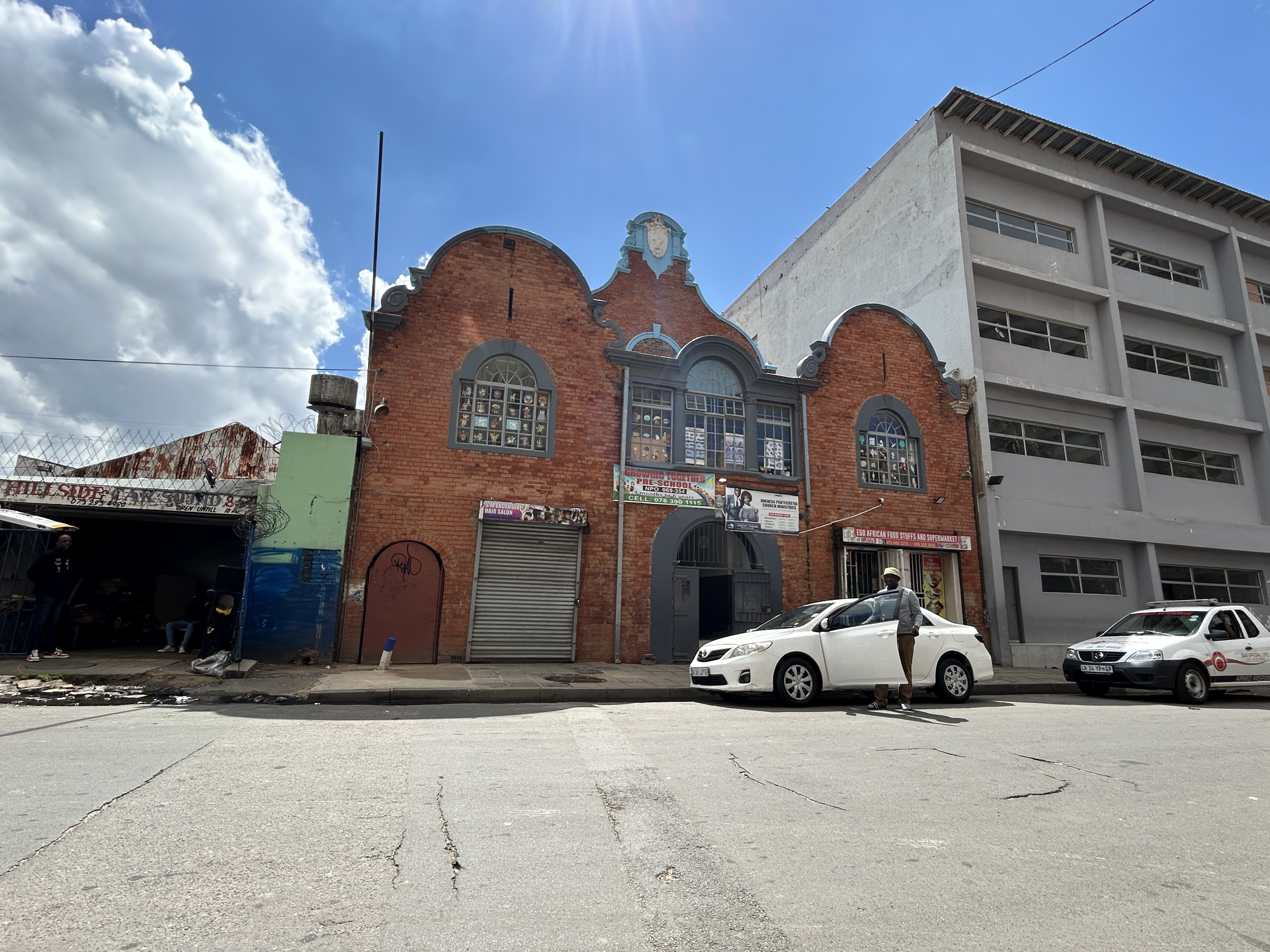
It’s still a building out of place in its surroundings, but rather than being called out as rundown and empty, it’s now an architectural rarity in an otherwise neglected part of town. .
96 End Street has been added to the COJ Heritage register and I intend to nominate it for a blue plaque.
Full version of this post with complete references at johannesburg1912.com
© Marc Latilla 2026. All rights reserved. This content may not be reproduced without permission.
 Marc Latilla
Leave a comment